The Custom AI Chip Revolution: How Anthropic, OpenAI, and Google Are Breaking Nvidia's Grip in 2026
In the first week of July 2026, Anthropic — the company behind Claude — quietly confirmed it was in early talks with Samsung to build its own AI chip on a 2-nanometer process. On its own, a single "talks with a foundry" story is easy to shrug off. But it landed in the middle of the loudest hardware shift the industry has seen in a decade: every major AI lab and cloud provider is now designing silicon to escape a single vendor. That vendor is Nvidia, and it still controls roughly 70-74% of the AI chip market.
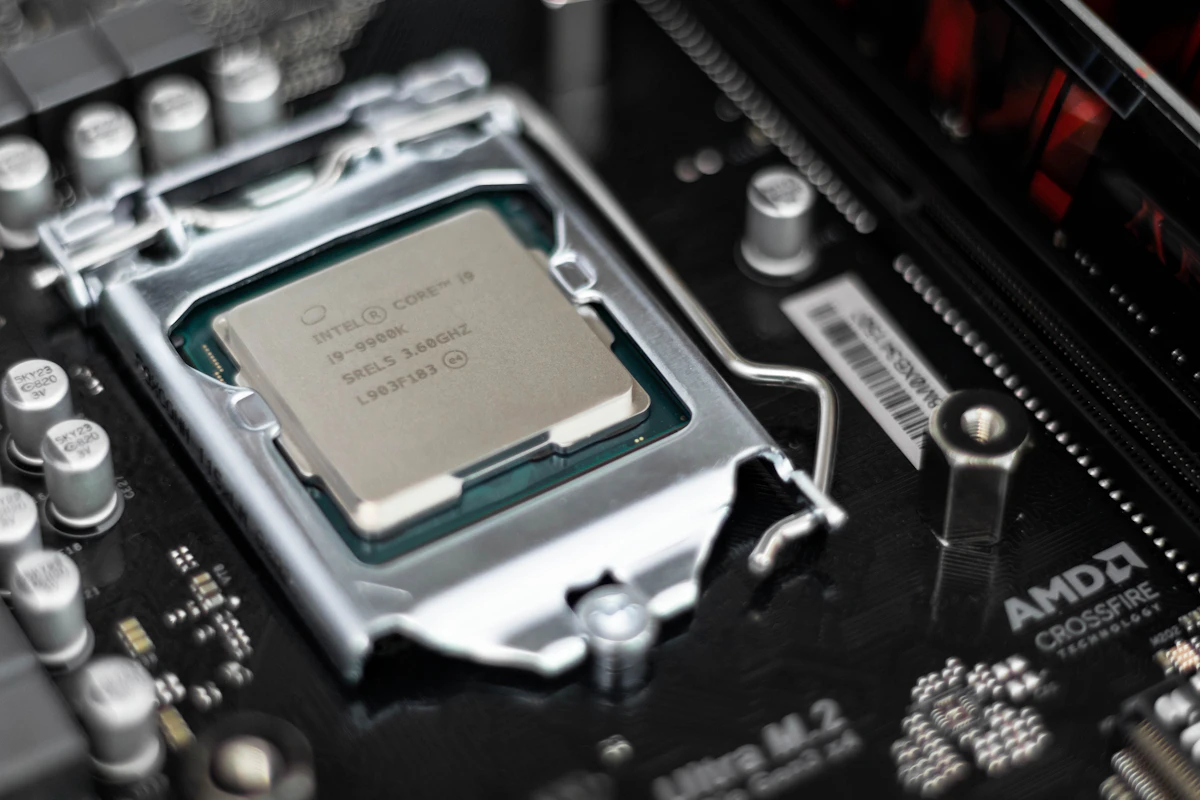
Custom AI chips — application-specific integrated circuits, or ASICs — are purpose-built for the narrow set of math operations that power model training and inference. They trade the flexibility of a general-purpose GPU for something hyperscalers care about far more at scale: lower cost, better performance-per-watt, and freedom from a supply chain bottleneck they don't control.
This article breaks down what actually happened, who is building what, the real numbers behind the "custom silicon is cheaper" claim, and — crucially for developers — why almost none of these chips will ever show up in your cloud console.
What Just Happened: Anthropic Joins the Silicon Race
According to Bloomberg, citing reporting from The Information, Anthropic has opened preliminary discussions with Samsung Electronics to manufacture a custom AI accelerator using Samsung's upcoming 2nm foundry process and advanced packaging facilities.
The details are deliberately vague — the company reportedly hasn't decided what the chip will do, how powerful it will be, or how it fits into a server. But the hiring tells the real story. As The Information reported via Yahoo Finance, Anthropic brought on Clive Chan from OpenAI's chip team in early June 2026 — the second hardware engineer to join that effort. You don't staff up a silicon team for a hobby project.
Importantly, Anthropic isn't dropping Nvidia. The company told The Information that AWS Trainium, Google TPUs, and Nvidia GPUs will all remain central to its compute strategy. This is the pattern across the industry: not a clean break, but a hedge. Nobody wants 100% of their most critical infrastructure locked to one supplier's roadmap and pricing.
Why Hyperscalers Are Abandoning General-Purpose GPUs
Three forces are driving the shift, and they reinforce each other.
Cost. Hyperscalers spent more than $380 billion on AI capex in 2025. At that scale, even a 30% reduction in the cost per inference is worth billions per year. Nvidia's gross margins — long north of 70% — are exactly the margin a hyperscaler would rather keep for itself.
Performance-per-watt. A GPU is a Swiss Army knife; an ASIC is a scalpel. By stripping out the general-purpose hardware that AI workloads never touch, a custom chip can deliver 3-5x better performance per watt on its target task. Power, not chip count, is now the binding constraint on data-center growth, which makes efficiency a strategic weapon.
Supply chain independence. Relying on one vendor for mission-critical infrastructure is a concentration risk. When Nvidia GPUs are allocation-constrained, whoever controls that allocation controls who gets to scale. Owning the roadmap removes that leverage.

The Contenders: Who's Building What
The "custom silicon" story isn't one company — it's an entire ecosystem that has quietly matured. Here's where the major players stand in 2026.
| Company | Chip | Node / Notes | Headline claim |
|---|---|---|---|
| TPU v7 "Ironwood" | Broadcom co-design | Up to 30% better TCO vs comparable Nvidia setups | |
| Amazon | Trainium 3 | In production | Trainium 2 already delivered 30-40% savings vs Nvidia |
| Microsoft | Maia 200 | TSMC 3nm, 140B+ transistors | 10+ PFLOPS FP4; 30% better perf/dollar than prior fleet |
| Meta | MTIA (300-500 series) | Broadcom co-design | Inference-focused, deployed at scale |
| OpenAI | "Jalapeño" | Broadcom partnership | 30-50% cheaper per query on high-volume models |
| Anthropic | Unnamed | Samsung 2nm (in talks) | Early-stage exploration |
| Nvidia | Vera Rubin | 288GB HBM4 | 50 PFLOPS FP4 — the incumbent's answer |
According to Tom's Hardware, Broadcom is the design partner behind Google's TPU, Meta's MTIA, Microsoft's Maia, and the OpenAI and Anthropic accelerator programs. That's the real power center of this shift: not the AI labs, but the two firms that know how to turn a spec into a manufacturable chip.
The Numbers: What Custom Silicon Actually Saves
The economic case is where the story stops being a press release and becomes a balance-sheet reality.
At production scale, custom ASICs deliver a 40-65% total-cost-of-ownership advantage over general-purpose GPUs for inference workloads. Amazon's Trainium 2 already demonstrated 30-40% cost savings versus Nvidia GPUs, and CNBC reported that Anthropic has trained models on half a million Trainium2 chips inside Amazon's largest AI data center.
The market is moving accordingly. Per TrendForce data cited by TechTimes, custom ASIC shipments are projected to grow 44.6% year-over-year in 2026 — nearly triple the 16.1% growth rate for merchant GPUs. ASIC-based servers are expected to reach 27.8% of the AI server market this year, the highest share since 2023.
Follow the money and it leads to two companies. Broadcom and Marvell together control roughly 95% of the ASIC co-design market. Broadcom reported $8.4 billion in AI semiconductor revenue for Q1 FY2026 — up 106% year-over-year — with a $73 billion AI backlog and a target of $100 billion in annual AI chip revenue by 2027. Marvell projects up to $11 billion in AI ASIC revenue in 2026. By 2033, the custom ASIC market is projected to reach $118 billion.
Nvidia isn't standing still — its Vera Rubin platform pushes 50 PFLOPS of FP4 and 288GB of HBM4. But some analysts project its inference market share could fall from above 90% to 20-30% by 2028 as custom silicon eats into the highest-volume workloads.

The Catch for Developers: You Can't Rent Most of These
Here's the part that gets lost in the stock-market coverage. If you're a developer or a startup, this revolution is happening above you, not for you.
Google's TPUs, Amazon's Trainium, Microsoft's Maia, and Meta's MTIA are largely captive silicon. They power the builders' own services and, in some cases, back-end managed APIs — but you can't provision a Maia 200 instance the way you spin up an Nvidia H100 or B200. As one analysis put it bluntly: if you are not AWS, Google, Microsoft, or Meta, these chips effectively do not exist for you.
The practical implications for the next couple of years:
- Inference APIs get cheaper, quietly. When a provider runs Claude, Gemini, or GPT on its own silicon, the savings can show up as lower token prices — a benefit you get without ever touching the hardware.
- Portability matters more than ever. Writing directly against a single vendor's low-level chip primitives is a lock-in trap. Higher-level abstractions (PyTorch, JAX, ONNX, vLLM, and provider-neutral inference layers) keep your options open as the hardware underneath shifts.
- The GPU cloud isn't going away. For the 99% of teams that aren't hyperscalers, rentable Nvidia (and increasingly AMD) GPUs remain the default. Custom ASICs narrow Nvidia's share, not its relevance to the broader market.
The takeaway for builders: don't optimize for a chip you'll never rent. Optimize for the abstraction layer, and let the price cuts flow to you.
Frequently Asked Questions
What is a custom AI chip (ASIC), and how is it different from a GPU? An ASIC is a chip designed for one specific job — in this case, the matrix math behind AI training and inference. A GPU is general-purpose and flexible across many workloads. The trade-off: an ASIC gives up flexibility for roughly 3-5x better performance-per-watt on its target task, which is why hyperscalers use them for their highest-volume, most predictable workloads.
Is Nvidia in trouble? Not immediately. Nvidia still holds around 70% of the AI chip market and continues to ship record volumes with new platforms like Vera Rubin. But its dominance in inference specifically is under real pressure, with some analysts projecting its inference share could fall to 20-30% by 2028 as custom ASICs scale.
Why is Anthropic partnering with Samsung instead of TSMC? The talks are still early and Anthropic hasn't committed. Samsung's 2nm process and advanced packaging give Anthropic a second leading-edge foundry option beyond TSMC, which is heavily booked. For Samsung, a high-profile AI customer is a chance to prove its foundry against TSMC's near-monopoly on cutting-edge nodes.
Can I use these custom chips as a developer? Mostly no. TPUs, Trainium, Maia, and MTIA are captive to their builders. The main way you benefit is indirectly — through cheaper inference APIs when providers run their models on their own silicon. Rentable Nvidia and AMD GPUs remain the practical option for everyone else.
Who actually profits most from the custom-chip boom? The design houses. Broadcom and Marvell together handle roughly 95% of custom ASIC co-design, so nearly every hyperscaler chip — regardless of whose logo is on it — routes revenue through one of them. That's why both companies are posting record AI revenue even as they compete indirectly with Nvidia.
Conclusion
The custom AI chip race isn't a single dramatic event — it's a structural shift that's been building for years and hit critical mass in 2026. Anthropic's Samsung talks are just the latest signal that owning your silicon has moved from a hyperscaler luxury to a competitive necessity. Nvidia will remain enormous, but the era of a single company sitting at the center of all AI compute is ending.
For developers, the smart move isn't to chase hardware you'll never touch. It's to stay portable, watch inference prices fall, and let the giants fight the expensive war over sand. The chips are getting more specialized — but the winning strategy for everyone else is to stay general.